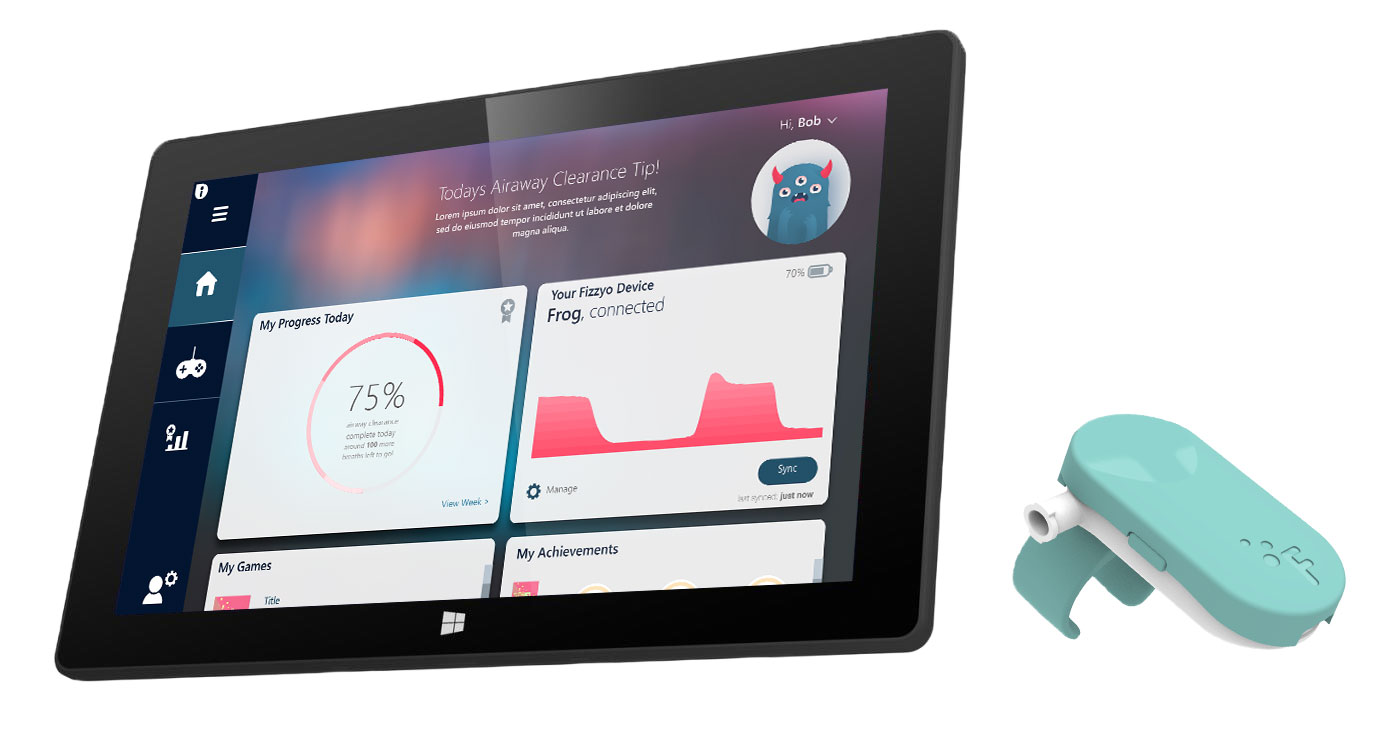
Gamifying airway-clearance exercises for cystic fibrosis sufferers.

How I helped design and build a platform to encourage children to perform their cystic fibrosis treatments.

role

  • UX & UI
  • System Architecture
  • Project Management
  • Programming
  • date

  • 2019
  • technology

  • Azure
  • Windows 10, UWP
  • Unity
  • Custom electronics
  • Cystic Fibrosis is a chronic, life-limiting condition affecting sufferers from birth. The main preventative treatment for CF is airway clearance exercises, however, this is often tedious and boring to perform, especially for children. Project Fizzyo aims to address this. It consists of a connected device and cloud platform that gamifies airway clearance exercises by turning breath data into joystick controls. Custom games have been developed with the help of hackathons and the system is now being evaluated in collaboration with University College London as a way for clinicians to monitor their patients and gain greater insight into their health, using statistical analysis and machine learning techniques.
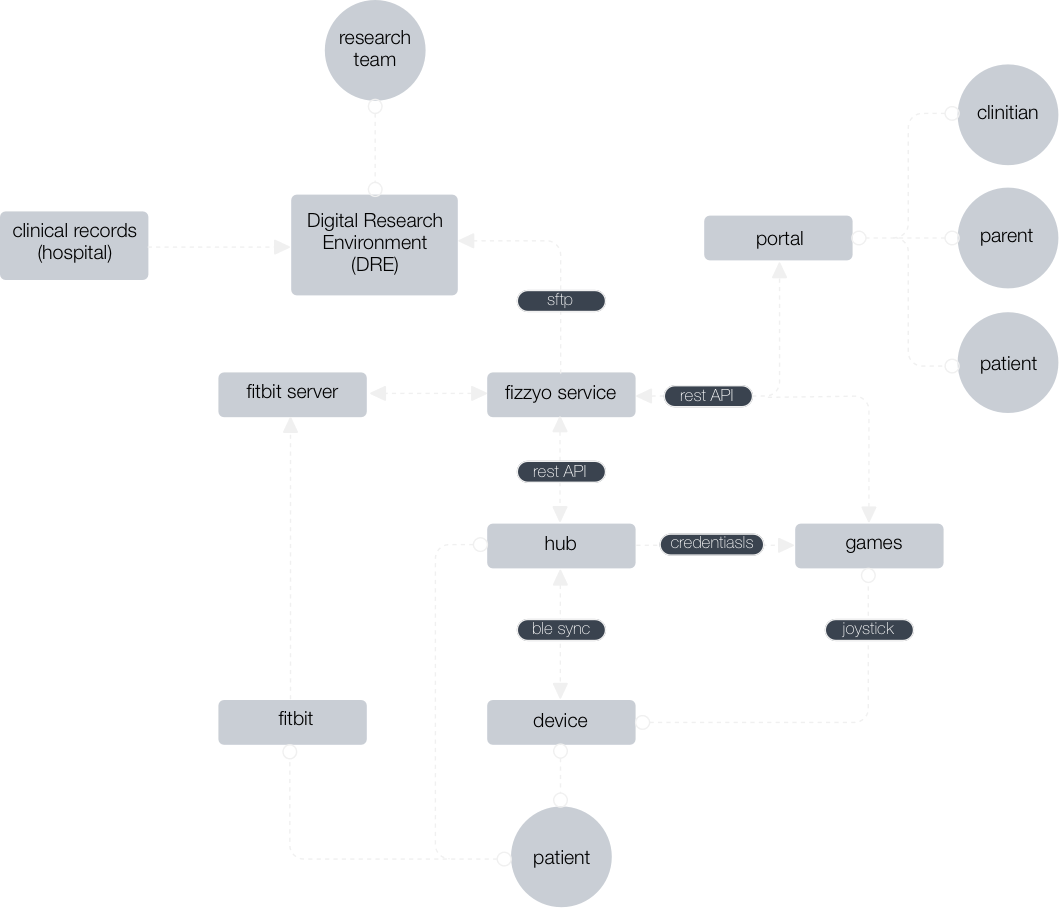

    The system consists of custom cloud services, applications and hardware.

    The BLE connected device logs airway clearance breaths and turns them into joystick input used to play custom games created in Unity. In turn a Windows Universal app is used to synchronise this data to a Node.js cloud platform, launch games and give users exercise feedback. The cloud platform stores exercise data as well as collecting fitBit based exercise data from users. This data is accessed through a react based web-application for administration, monitoring from a. parent or doctor and can be synchronised to a clinical research platform the “Digital Research Environment"

    Is designed to fit a variety of user roles.

    The Fizzyo system is used and supported by a complex variety of people. From the patients who use the device and play games, their parents and clinicians who want to keep track of their exercises to researchers who need access to exercise data in a anonymised format. To achieve a product that would work for these roles we took a user centered approach from the outset. Conducting interview, generating model personas and conducting iterative user testing with prototypes to arrive at a design that worked well for each person using the system.

    The Fizzyo hub is the patients interface with the system.

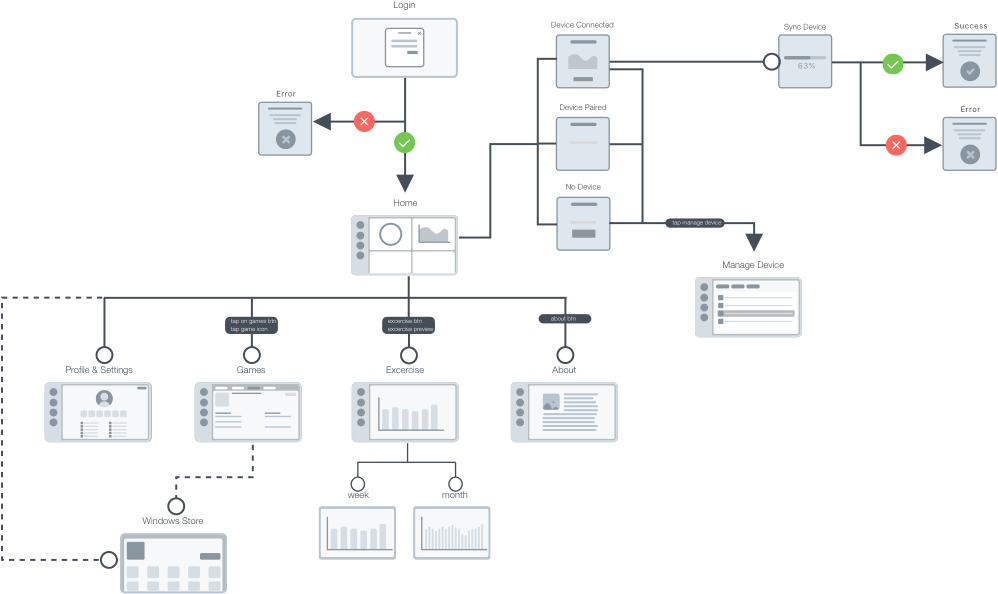
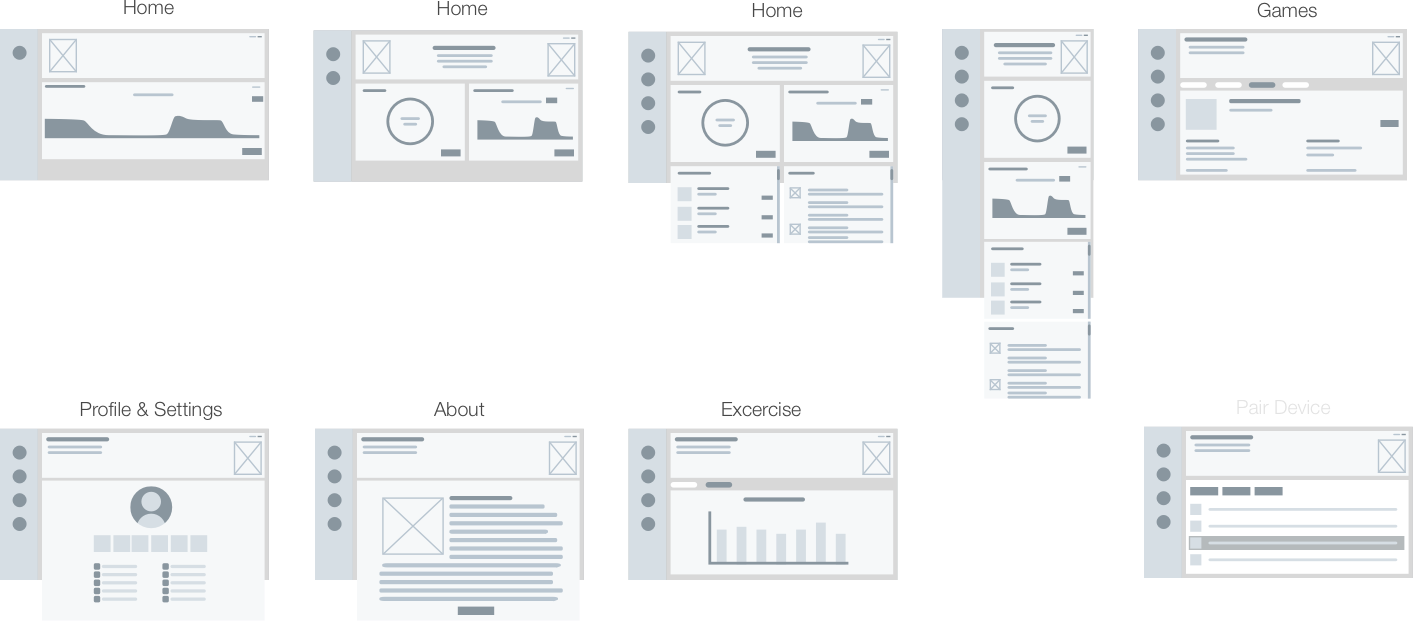
    A hub application was designed to be the patients interface with the system and had to adapt depending on what stage of the trial a user was in. Because of this the User Experience design of this part of the system was at the forefront.

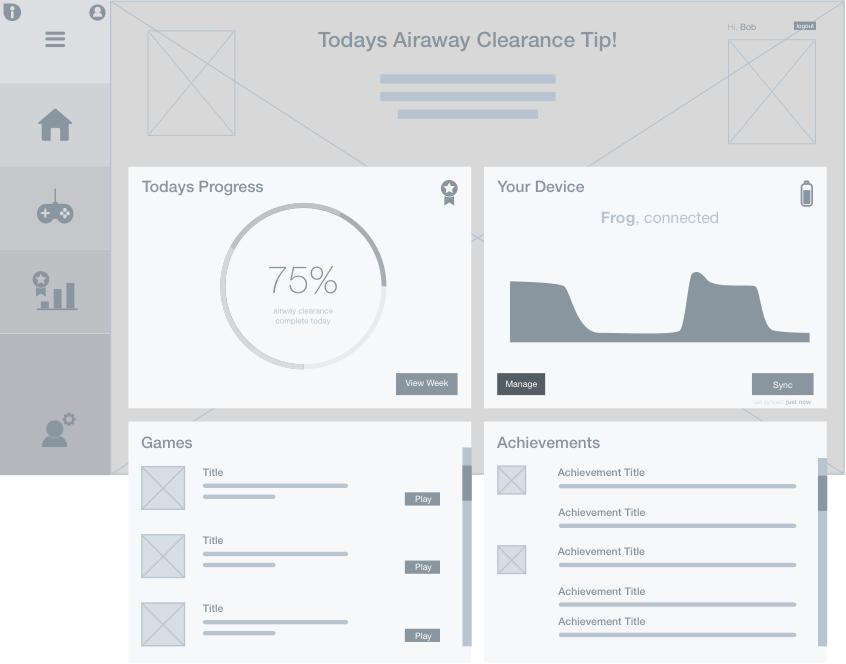
    The hub was used to synchronise the device, give exercise feedback, launch games and see a users scores and achievements.

    The Hub is designed to be completely responsive. Designed for different screen sizes and orientations it is also designed for different modes functionality and parts of the UI are removed. The hub is designed for customisation with custom backgrounds and avatars. To give a greater sense of ownership.

    A custom device monitors breaths.

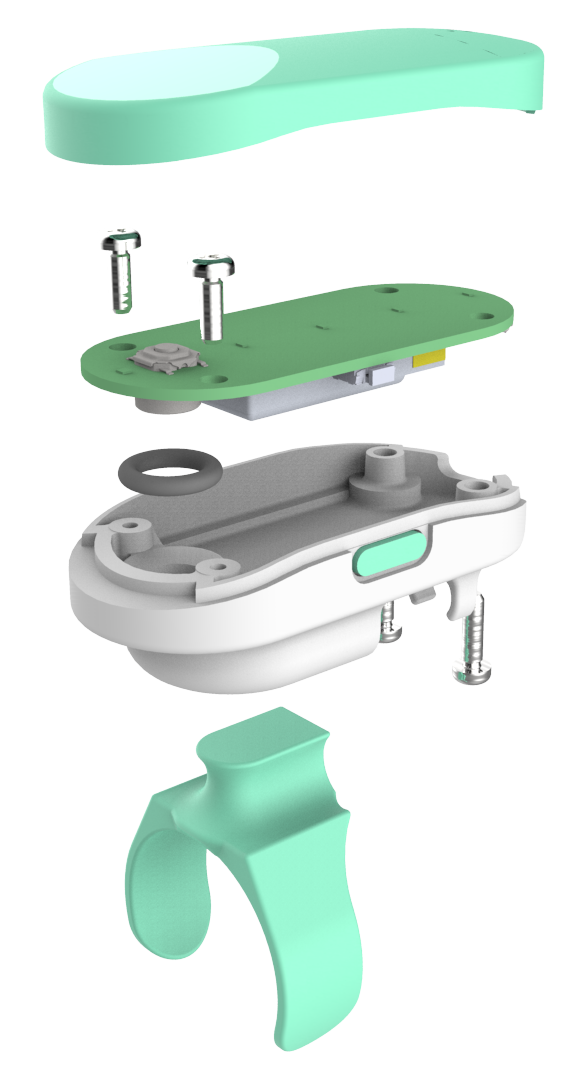
    A custom Bluetooth Low Energy device is clipped on to existing airway clearance equipment and monitors a users breaths using a pressure sensor. These breaths are logged and can also be used as real time input to Fizzyo games. The devices top includes a built in button that allows a extra degree of control in games but is simple enough so that the user can stay focused on breathing.

    A Pilot study of the system is now underway with 150 patients currently using the system.